

There are Korean dishes that feel made for first impressions.
Kimchi jjigae is not one of them.
It is not plated to look elegant, and it does not try to win you over with neat little details. It usually arrives bubbling, a little messy, and smelling stronger than some first-time visitors expect. But that is exactly the point. Kimchi jjigae is not built to impress from a distance. It is built to feel satisfying the moment you sit down and start eating.
That is why this dish matters so much. If you want to understand what everyday Korean food feels like, kimchi jjigae is one of the best places to start.
The stew that shows up when no one needs to impress you
Some foods are for celebrations. Some are for guests. Kimchi jjigae is often for ordinary days.
It is the kind of meal people eat for lunch near the office, for dinner at home, or on a cold day when they want something hot and reliable. That ordinary quality is part of why it means so much. In Korea, food is not only about occasion. It is also about rhythm. What do people eat often? What do they go back to without thinking too hard? Kimchi jjigae belongs in that category.
It is familiar in a way that feels lived-in. Not flashy. Not trendy. Just deeply rooted.
That everyday feeling is also what makes it different from dishes like samgyetang, which many people connect with summer health rituals, or Korean BBQ, which feels more social and outing-based. Kimchi jjigae is more domestic than that. It feels like something people genuinely return to as part of regular life.
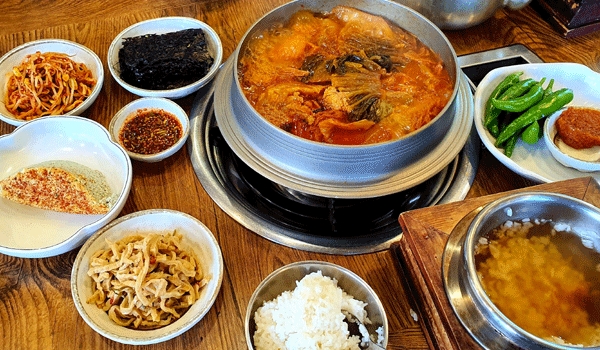
Why older kimchi is actually better here
This is one of the first things that surprises many foreign visitors.
Fresh kimchi can be crisp, bright, and refreshing. But for kimchi jjigae, older kimchi is often better. As kimchi ferments longer, the flavor gets deeper, sourer, and more intense. That stronger character is exactly what gives the stew its body.
So if someone tells you the kimchi is too old to eat on its own, that does not necessarily mean it is a problem. In many Korean homes, that is the moment when kimchi jjigae becomes the obvious answer.
That tells you something important about Korean food culture: ingredients do not always lose value as they age. Sometimes they change roles. Kimchi that feels too sharp on the side dish plate can become perfect once it goes into a hot pot with broth, pork, tofu, and green onion.
It is a very practical kind of cooking, but also a very smart one.
More than spicy: rich, sour, savory, and warm
A lot of people hear “kimchi stew” and imagine one simple flavor: spicy.
But kimchi jjigae is usually more layered than that. Yes, it has heat, but the stronger impression is often the combination of sour kimchi, savory broth, soft tofu, and the richness that comes from pork or tuna, depending on the version. The spice is there, but it is not the whole story.
That is part of why the dish keeps people coming back. It does not feel sharp in only one direction. It feels rounder than that. Hot, slightly sour, deeply savory, and especially good with rice.
And the rice matters. Koreans usually do not eat kimchi jjigae like a standalone soup. It becomes a full meal when eaten with rice, side dishes, and sometimes a simple egg dish or grilled meat on the side. That balance is part of the experience.
If you have already read my post on tteokbokki, the contrast is interesting. Tteokbokki is more snack-like, more street-friendly, and more directly sweet-spicy. Kimchi jjigae feels more grounded, more home-table, and more tied to daily meals.
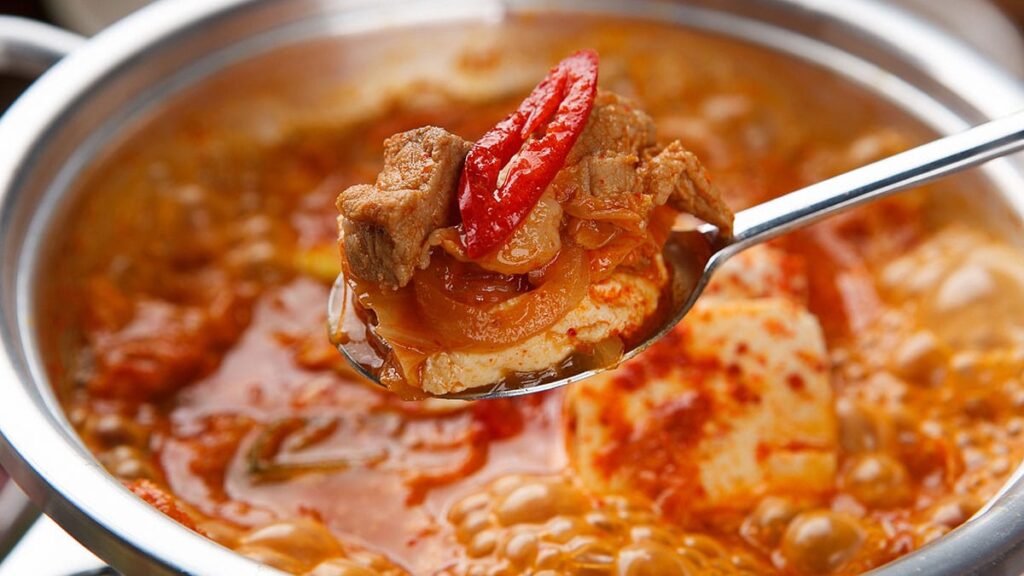
A dish with many versions, but the same emotional center
There is no single perfect version of kimchi jjigae.
Some people prefer pork because it makes the broth richer. Some like tuna kimchi jjigae because it is lighter and especially common at home. Others want extra tofu, extra green onion, or a stronger sour kick from well-fermented kimchi. Restaurants, homes, and regions all handle it a little differently.
But even with those variations, the emotional core stays similar. Kimchi jjigae is still the dish you order when you want something dependable. It feels direct. It does not pretend to be refined. That is part of its charm.
In that sense, kimchi jjigae represents something important in Korean food culture: food that is loved not because it is rare, but because it fits real life so well.
Why it tells you so much about Korean eating habits
If someone asked me to name a Korean dish that explains everyday eating better than most famous tourist foods, kimchi jjigae would be high on the list.
It shows how central kimchi is. It shows how important rice-and-stew combinations are. It shows how often Korean meals are built around warmth, sharing, and a few simple dishes eaten together rather than one oversized plate. It also shows that comfort food in Korea often comes from repetition, not novelty.
That is why kimchi jjigae feels culturally useful to understand. It is not just tasty. It explains a pattern.
And that pattern appears across Korean food again and again: simple-looking meals with deeper logic behind them.
If you liked reading about gimbap as an everyday, practical food, kimchi jjigae is another good example of how Korean meals often prioritize familiarity and rhythm over showiness.
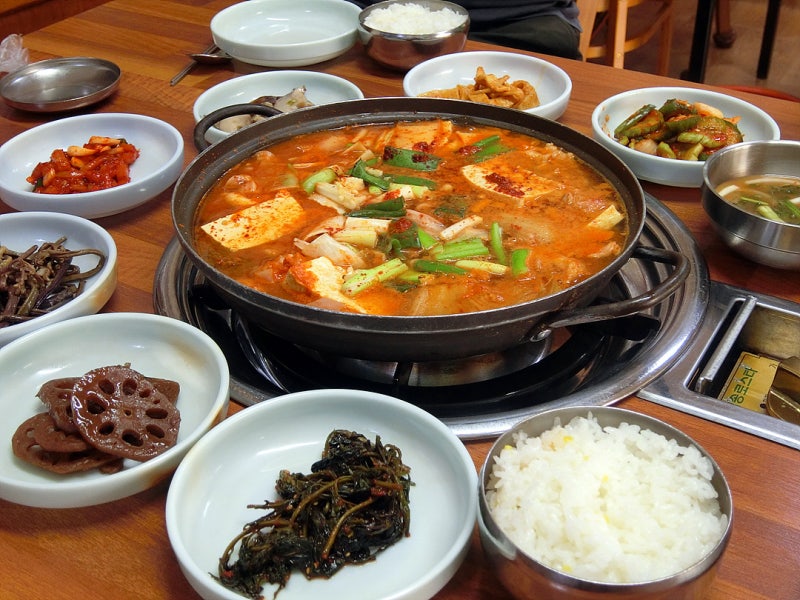
Not fancy, but unforgettable
Kimchi jjigae is not the Korean dish that tries hardest to charm international visitors.
And maybe that is exactly why it stays with people.
It is honest food. Strong-smelling, deeply familiar, built from something already sitting in the kitchen, and made to be eaten hot with rice. It reflects a kind of Korean everyday practicality that many famous export-friendly dishes do not show as clearly.
So yes, kimchi jjigae is a spicy stew. But if that is all you see, you miss the better part of it.
It is also one of the clearest windows into how Korea actually eats when the cameras are gone, the trends are gone, and dinner just needs to feel right.