

A lot of travelers first meet bibimbap as a “beautiful Korean dish.”
That is true, but it is also a little incomplete.
Bibimbap does look striking at first. VISITKOREA describes it as a bowl of rice topped with ingredients like bracken, spinach, bellflower root, and meat, and points out that the colors and flavors come from seasonal local ingredients. But what makes the dish feel Korean is not only the appearance. The same official description says bibimbap symbolizes a Korean style of mixing and combining different ingredients together, which gets closer to why the meal feels so natural once you actually eat it.
That is why bibimbap is better understood as a meal about balance rather than decoration.
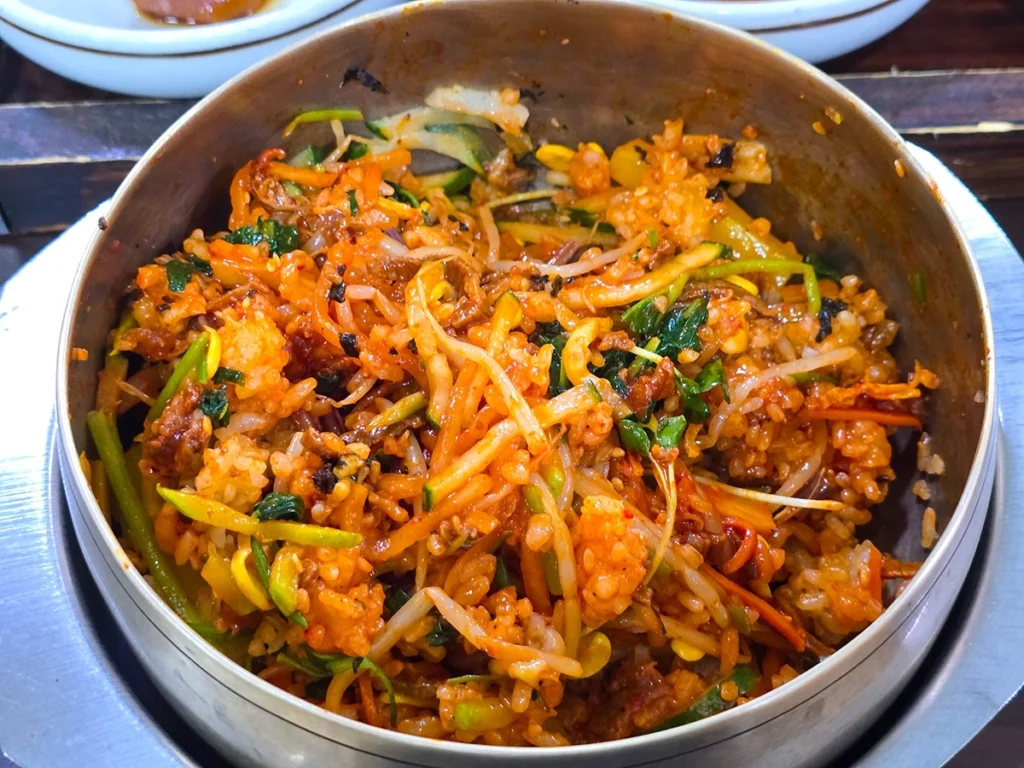
Before you mix it, the bowl can look almost too organized to disturb. After you mix it, everything changes. The order disappears, but the dish starts making more sense. VISITKOREA’s Jeonju bibimbap feature explains that the toppings typically include vegetables, beef, egg, red chili paste, and sesame oil, and that the whole point is to combine them into a harmonious bowl. That shift from neat arrangement to total mixing is the real charm.

One reason bibimbap stays popular is that it makes variety feel simple.
Instead of serving every element separately, the dish gathers rice, vegetables, sauce, and protein into one bowl and asks you to decide the final balance yourself. VISITKOREA notes that each namul ingredient is prepared separately to preserve its own flavor and texture before being brought together, which helps explain why bibimbap feels layered without feeling complicated. It is not random mixing. It is structured variety that becomes flexible at the last moment.
That flexibility is probably one reason the dish travels so well across audiences. VISITKOREA explicitly says bibimbap is one of the Korean foods most favored by foreigners. That makes sense. The format is easy to understand even if the ingredients are new. Rice gives it familiarity. Vegetables make it look approachable. The sauce and sesame oil bring the identity. You do not need a long explanation before the dish starts making sense.
If you already read our posts on gimbap and kimchi jjigae, bibimbap sits somewhere between them in feeling. It does not have the grab-and-go practicality of gimbap, and it is less comfort-brothy than kimchi jjigae. Instead, it feels like a composed everyday meal: colorful, adaptable, and easy to read once you understand the idea of mixing.

Another thing that makes bibimbap interesting is that it can feel both ordinary and regional at the same time.
The general version is familiar across Korea, but VISITKOREA also highlights regional forms such as Jeonju bibimbap, where ingredients, broth-cooked rice, and even yellow mung bean jelly can make the bowl feel more distinctive. The official Jeonju feature says the vegetables are prepared separately, the rice may be cooked with broth, and the dish is meant to come together as a balanced whole. So even when bibimbap becomes more famous or more elaborate, it still keeps the same core idea: many parts, one bowl, full mix.
That is also why bibimbap often feels more practical than fancy in Korea.
Yes, it photographs well. Yes, it can look ceremonial before you touch it. But its final form is not delicate. It is meant to be stirred, adjusted, and eaten as a real meal. VISITKOREA’s own instructions for Jeonju bibimbap are refreshingly direct: mix it, taste it, and add more red chili paste if needed. That straightforwardness says a lot. The dish may look refined, but it still expects you to treat it like food first.

There is something very Korean in that logic.
Bibimbap does not ask whether each element should stay separate forever. It assumes that different textures and flavors can become better once they are brought together with some care. That is part of why the dish feels so satisfying. The vegetables keep the bowl from feeling heavy. The rice keeps it grounded. The sauce gives it direction. The final result feels balanced without trying too hard to look healthy or disciplined. That balance is my reading of the dish, but it fits the way official Korean tourism sources describe bibimbap as a harmony of ingredients rather than a single dominant flavor.
For first-time visitors, bibimbap is also one of the easiest Korean foods to recommend. It is recognizable enough to feel safe, but still distinct enough to feel like you are eating something specifically Korean. And because the topping mix can vary by region, season, and restaurant, it gives you a good entry point into a bigger part of Korean food culture: the importance of rice, namul, sesame oil, gochujang, and the idea that one bowl can still carry a lot of texture.
If you later move on to something heavier or more intense like Korean BBQ or samgyetang, bibimbap still holds up as a useful reference point. It teaches the rhythm of many Korean meals in a very compact way: grain at the center, side ingredients around it, seasoning that ties everything together, and a final bite that feels more unified than the pieces first suggest.
So yes, bibimbap is colorful.
Yes, it is one of the most recognizable Korean dishes.
And yes, it is easy to photograph.
But the reason it stays with people is a little different.
It is memorable because it turns variety into comfort. It takes many small things, lets them keep some of their identity, and still makes them feel right together in a single bowl. That is what makes bibimbap more than a famous food photo. It makes it feel like one of the clearest expressions of how a Korean meal can be both balanced and practical at the same time.