
![[ATEEZ] Adrenaline: Meaning, Momentum, and Why the Song Feels Like Pure Forward Motion](https://koreadayone.com/wp-content/uploads/2026/03/1-11.jpg)
You can understand “Adrenaline” before you understand a single lyric.
It is all in the push.
ATEEZ released “Adrenaline” as the title track of GOLDEN HOUR : Part.4 on February 6, 2026, and the official rollout treated it like the center of the era from the start. Korean coverage around the comeback described the song as the explosive front line of the album, not a side track or a softer entry point.
What makes the song work is that it does not confuse speed with chaos. Reports in Korean entertainment media described “Adrenaline” as the kind of title track that raises the temperature of the comeback through direct energy and performance focus, and that framing feels right. The song does not sound messy or overloaded. It sounds locked in, like a group choosing to go faster without losing control.

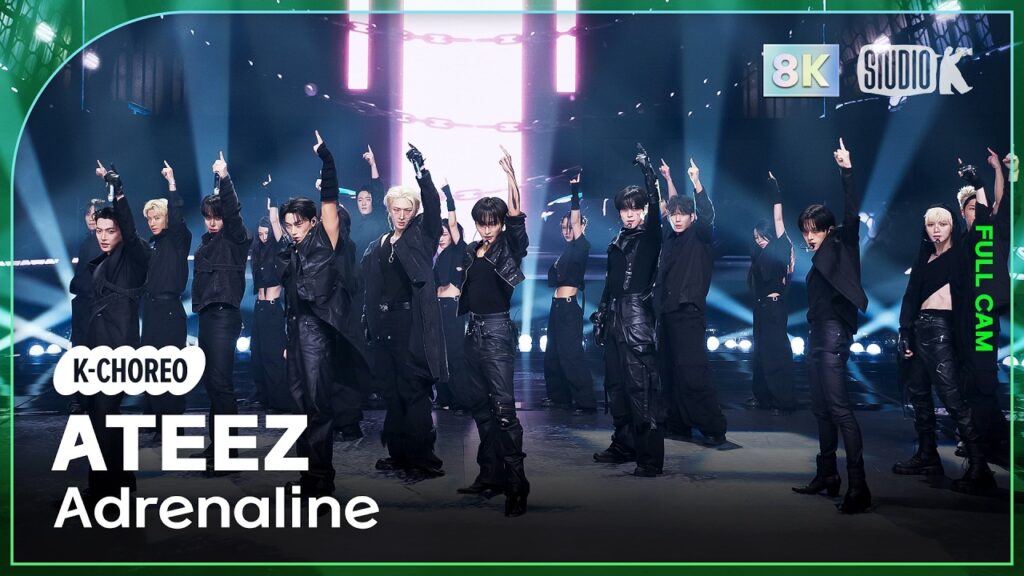
That is also why the title fits so cleanly. “Adrenaline” is not trying to be mysterious. It tells you exactly what kind of feeling it wants and then commits to it with performance. Starnews reported that the choreography drew especially strong reactions for expressing the song title in an intuitive, addictive way, with member San participating in refining the choreography. That matters because this is one of those tracks where movement is not decoration added afterward. Movement is part of the meaning.
If you already read our [SEVENTEEN] Super post, the contrast is useful. “Super” feels monumental, almost architectural. “Adrenaline” feels tighter and more urgent. It does not want to look enormous first. It wants to hit your system first.
That urgency also showed up in the initial reaction. Starnews reported that “Adrenaline” ranked high on iTunes Top Songs in 54 countries and regions, including No. 1 in 18, while the music video trended widely across countries including the United States, the United Kingdom, Germany, and Spain. Separate coverage before release also noted that the trailer had already hit No. 1 on YouTube Music Video Trending Worldwide and No. 2 on YouTube Video Trending Worldwide.
Another reason “Adrenaline” is a strong pick right now is that the overseas response was not vague. It was measurable. Korean reports on Billboard performance said the song debuted at No. 1 on World Digital Song Sales and Dance Digital Song Sales, while the album hit No. 3 on the Billboard 200, topped World Albums, and kept charting for multiple weeks after release. By March 11, reporting confirmed the album had stayed on the Billboard 200 for four consecutive weeks, moving from No. 3 to No. 18 to No. 45 to No. 108.
That bigger chart story matters because “Adrenaline” does not feel like a one-day shock song. It feels like the kind of title track that pulls the entire comeback forward. When the album itself holds up that well, the song starts reading less like a teaser of the era and more like the engine of it. That is an inference, but it is strongly supported by the album’s multiweek Billboard 200 run and the title track’s detailed Billboard chart entries.
If you have also read our [Stray Kids] God’s Menu post, this is another good comparison. Both songs understand how to turn performance into identity. But “God’s Menu” feels louder and more texture-heavy. “Adrenaline” feels more like pressure building inside motion. Less swagger, more acceleration.

I also think the song is interesting because it is not trying to sound elegant. It is trying to feel alive.
That sounds simple, but it is not. A lot of performance-focused songs aim for impact and end up sounding heavy. “Adrenaline” keeps enough sharpness in the beat and enough lift in the performance that it never collapses under its own intensity. The result is a song that feels replayable not because it gets softer with time, but because it keeps your attention in motion.
That is probably why the comeback read so well internationally. The core message does not depend on a lot of cultural explanation. You hear the push, the speed, the refusal to slow down, and you get the point almost immediately. That is my reading, but it lines up with the song’s strong iTunes spread, YouTube traction, and Billboard song-chart results.

So if you want another male-idol K-pop song that feels current, physical, and easy to understand across borders, “Adrenaline” is a very strong choice.
Not because it is trying to be sentimental.
Not because it wants to overexplain itself.
But because it knows exactly what it wants to do: raise the pulse, keep moving, and make performance feel like the whole point. And based on the early global response, that is exactly how listeners heard it.