

A lot of people imagine baseball as a slow sport. You sit down, watch a long game, keep track of the score, and wait for big moments to break the calm. That is part of baseball in many places. In Korea, though, the mood in the stadium often changes that expectation almost immediately.
What surprises many first-time visitors is how active the crowd feels. A Korean baseball game is not built around silence between pitches. It moves almost constantly. There are team songs, player-specific chants, organized cheering, call-and-response moments, and waves of energy that keep the stadium feeling alive even when the game itself slows down. You are not just sitting there waiting for something exciting to happen. The atmosphere keeps giving you something to react to.
That is one of the clearest differences in Korean baseball culture. The crowd is not treated like background noise. Fans are part of the show. The game is still the center, of course, but the experience around it is much more participatory than many foreign visitors expect. Even someone who does not fully understand the rules can still have a great time because the cheering tells you where the emotion of the game is going.
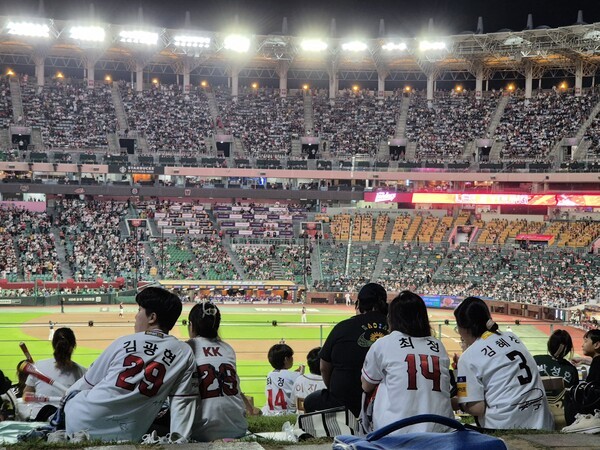
Another reason the culture stands out is how specific the cheering can be. In Korea, many players have their own songs or chant patterns, and fans know exactly when to use them. That gives the game a very different rhythm. Instead of one general wave of support, the sound changes depending on who is at bat, what inning it is, and how tense the moment feels. It creates a sense that the crowd is following the game emotionally in real time.
This is also why Korean baseball often feels welcoming to casual visitors. You do not have to arrive as a statistics expert. You can learn the vibe first. You hear the chant, look around, notice when people stand, clap, sing, or raise their cheering sticks, and before long you are part of it too. In that sense, a Korean baseball stadium can feel a little like other shared social spaces in Korea where people participate together rather than stay quietly separate. If you have already read our posts about Noraebang or Korean four-cut photo booth culture, you may notice a similar pattern here: people enjoy doing things together in a visible, expressive way.
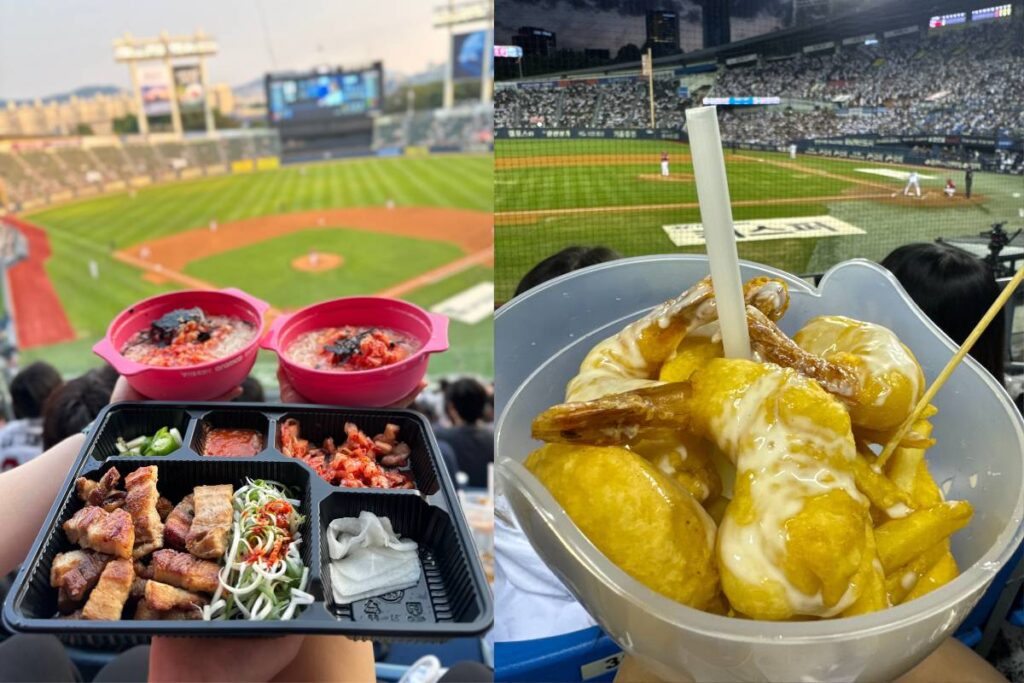
Food matters too, and that changes the feeling of the game. A baseball outing in Korea is not just about the scoreboard. It is also about what you bring, what you order, and what you share. Snacks, fried chicken, drinks, and easy stadium food all become part of the rhythm of the night. That makes the whole experience feel social in a very practical way. You are watching the game, but you are also hanging out, eating, reacting, and talking at the same time.
There is also something very Korean about the emotional tempo of the experience. People can be relaxed one second and fully locked in the next. The game has room for chatting, eating, and joking around, but when a big moment comes, the whole section can suddenly tighten with attention. That swing between casual fun and collective focus is part of what makes the atmosphere memorable. It feels lived-in, not staged.
For travelers, this means a baseball game can be one of the easiest ways to feel everyday urban culture in Korea without needing a deep explanation first. Museums and palaces tell you history. Baseball shows you rhythm. You get to see how groups occupy space, how sound is used, how excitement builds publicly, and how ordinary leisure in Korea can become surprisingly intense and communal. It is culture through habit, not through a formal lesson.
This is also why the experience stays with people who do not even consider themselves sports fans. They remember the songs. They remember the crowd moving together. They remember how easy it was to be pulled into the energy. In many countries, sports culture can feel like something you watch from the outside unless you already belong to it. In Korea, baseball often feels easier to enter. The cheering structure gives you a way in.
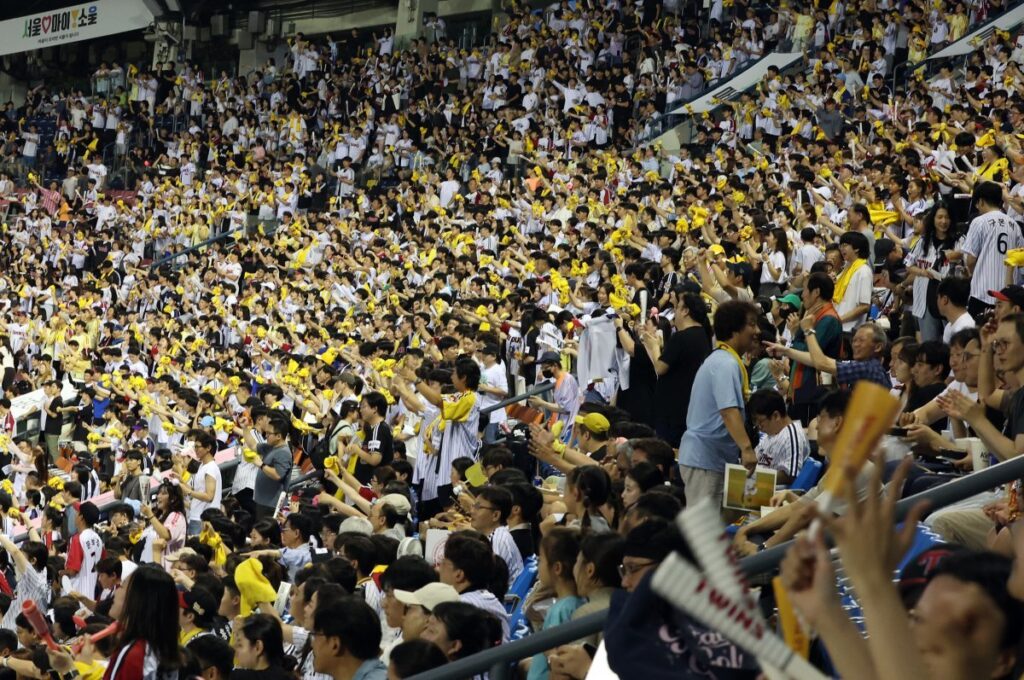
If you are trying to understand Korea beyond famous landmarks and food lists, this kind of place matters. A baseball stadium shows a side of the country that is energetic, social, and unafraid of public enthusiasm. It is not polished in a quiet way. It is warm, noisy, and collective. That is exactly why so many visitors end up talking about the atmosphere as much as the game itself.
In the end, Korean baseball cheering culture is memorable because it turns spectators into participants. The field gives the event its structure, but the crowd gives it its identity. And once you feel that identity in person, it becomes very easy to understand why a baseball game in Korea can feel like much more than just baseball.