
![[Jimin] Who: Meaning, Longing, and Why the Song Feels So Restless](https://koreadayone.com/wp-content/uploads/2026/03/1-17.jpg)
Some K-pop songs arrive with power. “Who” arrives with a question.
That difference matters. The song is the focus track from Jimin’s second solo album MUSE, and even on paper it moved like more than a one-week release event: it debuted at No. 4 on the UK Official Singles Chart, giving Jimin his solo career-best there, and it later spent 33 weeks on the Billboard Hot 100, which Forbes noted made it the longest-charting K-pop song in the chart’s history as of March 2025.
But the reason “Who” stays with people is not just chart success. It is the mood. The song does not sound triumphant, playful, or fully broken. It sounds suspended. Jimin is not singing from the clean certainty of romance; he is singing from the space before it, where desire, imagination, and absence all blur together. That is why the title works so well. “Who” is not just a hook. It is the emotional condition of the whole track. This is an interpretation, but it is strongly grounded in the song’s framing, title, and visual presentation in the official release.
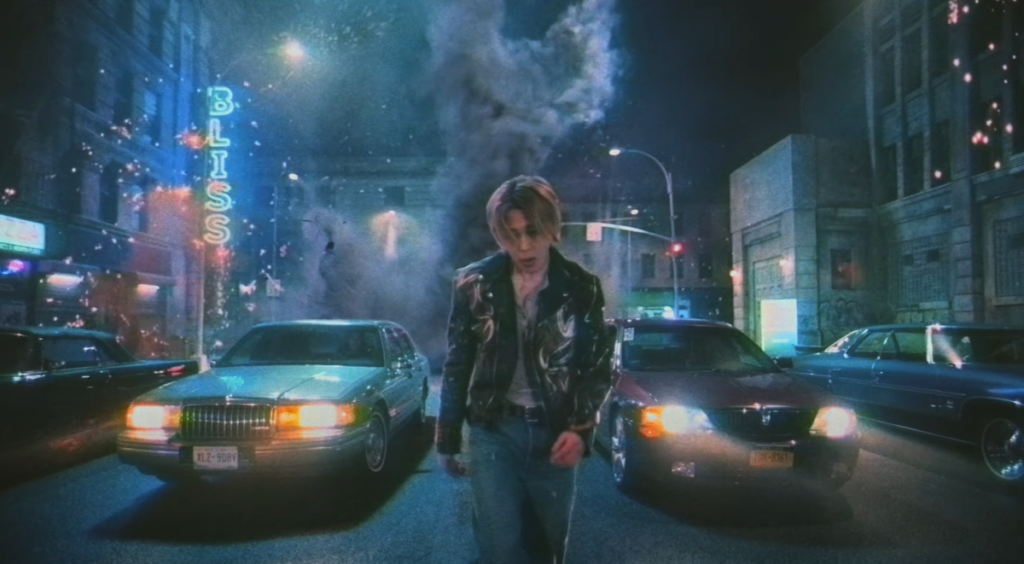
What makes the song feel especially effective is how controlled it is. It does not over-explain itself. The production leans into movement and repetition rather than dramatic overload, so the feeling of longing never turns theatrical. Instead, it keeps circling. The track sounds smooth on the surface, but underneath that polish there is impatience. That tension gives the song its replay value. You do not just hear yearning in “Who.” You hear yearning trying to stay composed. This reading is interpretive, but it matches the official performance and release framing around the single.
There is also something interesting about where “Who” sits in Jimin’s solo identity. If [BTS] Spring Day works through collective emotion and memory, and [ROSÉ] APT. wins through instant communal energy, “Who” moves differently. It is more interior than either of them. More private. More sleepless. It does not ask a crowd to shout along right away. It pulls listeners inward first, then stays there.
That inward pull did not stop the song from traveling. Billboard’s chart coverage showed “Who” peaking at No. 12 on the Hot 100 in its second week, while Official Charts reported its No. 4 UK debut. By late February 2025, Yonhap also reported that the song had surpassed 1.5 billion Spotify streams. Those numbers matter because they show this was not just a fandom spike. The song kept moving because its emotional tension remained easy to return to.
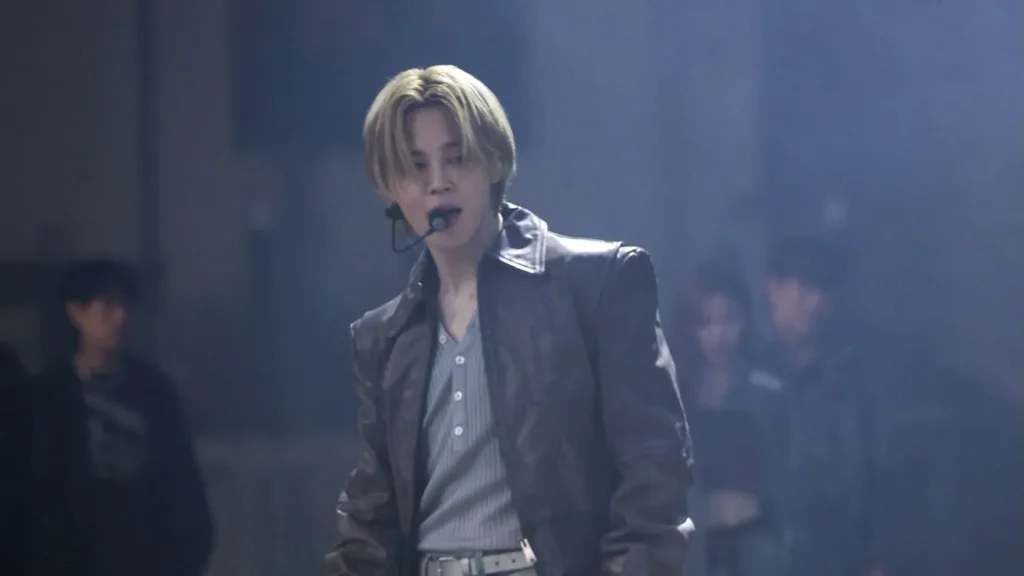
That is probably why the song feels so restless. It never gives you the emotional landing too early. Many love songs are built around confession, heartbreak, or reunion. “Who” stays in the middle zone. It is about wanting, imagining, looking, and not fully arriving. That unfinished quality makes the song feel modern in a very specific way. It understands that uncertainty can be more replayable than resolution.
And that is where Jimin’s performance style helps. He does not treat the song like a big vocal showpiece. He treats it like a chase. The official music video and televised performances both lean into that feeling of movement through space, which supports the song’s core emotional idea: the person at the center of the track remains just out of reach.
If you already have posts on [BTS] Spring Day and [BTS] Black Swan, this one fits naturally beside them, but for a different reason. “Spring Day” hurts through memory. “Black Swan” turns artistic fear into drama. “Who” is more immediate and more intimate than both. It does not sound like a reflection after the fact. It sounds like the feeling while it is still happening.

In the end, “Who” works because it never fully settles the feeling it creates. It stays elegant, but uneasy. Emotional, but not melodramatic. Clear enough to follow, but open enough to keep echoing after the song ends. That balance is hard to make feel natural, and it is exactly what gives the track its staying power.