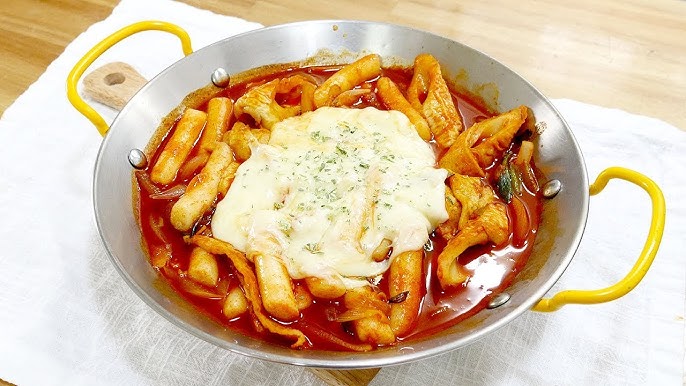
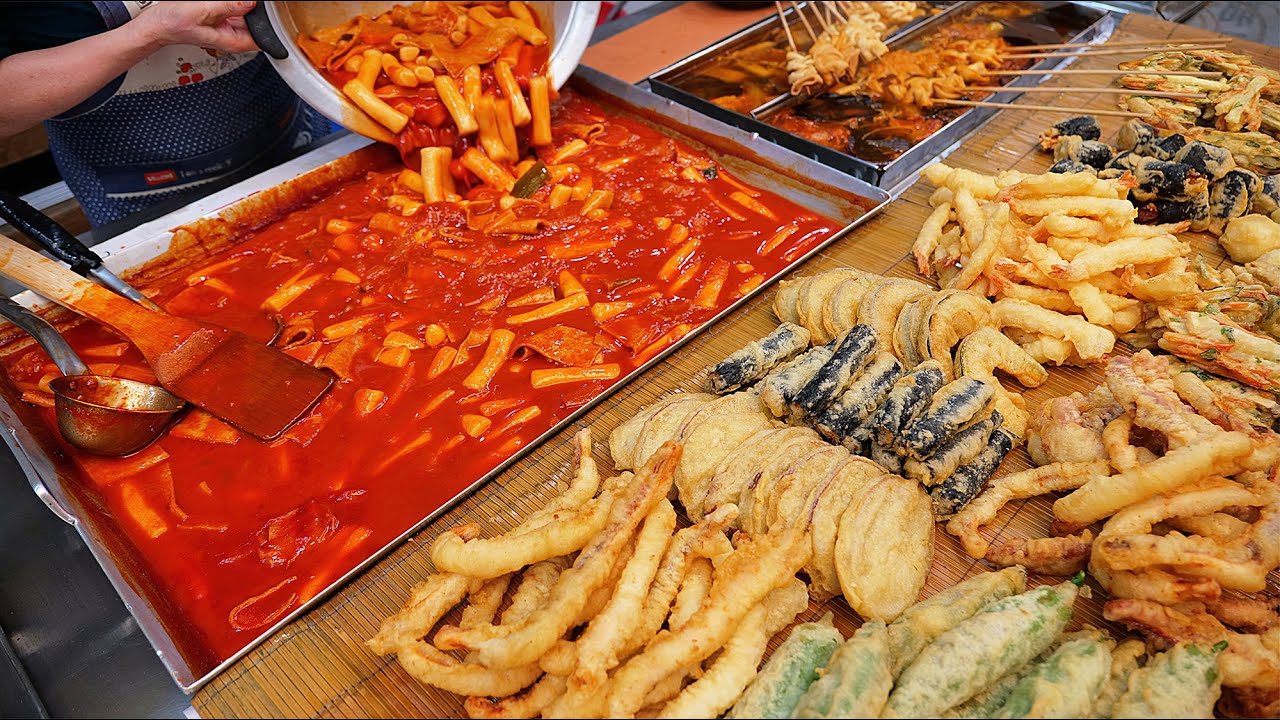
If you try tteokbokki in Korea for the first time, the first thing you usually notice is the color. It looks boldly spicy, and often it is. VISITKOREA describes tteokbokki as a dish of thin rice cake sticks stir-fried with vegetables like cabbage and green onions in red chili paste, and calls it one of Korea’s most representative spicy foods and one of its most popular street foods.
What tteokbokki actually tastes like
A lot of first-time visitors expect tteokbokki to taste only spicy, but that is not really the full picture. Official descriptions point to a sauce that is spicy and also thick and sticky, with fish cake, rice cakes, and vegetables often simmered together. That usually gives the dish a mix of heat, sweetness, and a slightly savory depth rather than just one-note spice.
The texture matters just as much as the flavor. Tteokbokki is remembered for its chewy rice cakes, and that chewiness is one of the reasons people either love it immediately or need a minute to get used to it. VISITKOREA notes that there are two common types of rice cakes used in tteokbokki: flour-based cakes and true rice cakes, which helps explain why texture can feel a little different depending on where you order it.
Why fish cake shows up so often
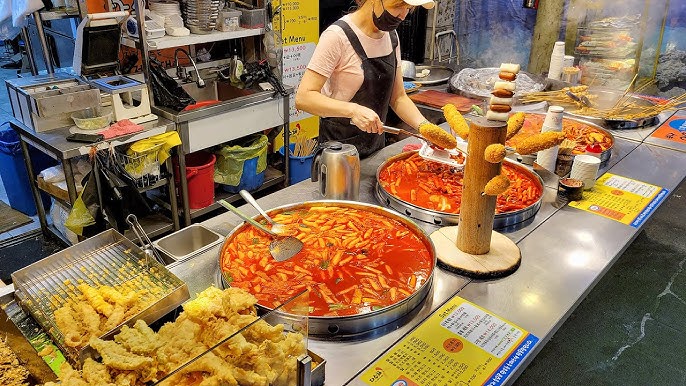
If you see tteokbokki in Korea, there is a good chance fish cake will be nearby. VISITKOREA says thin fish cake sheets are frequently added to standard tteokbokki, and broader Korean street-food guides also list tteokbokki alongside fish cakes as classic bunsik foods visitors see everywhere.
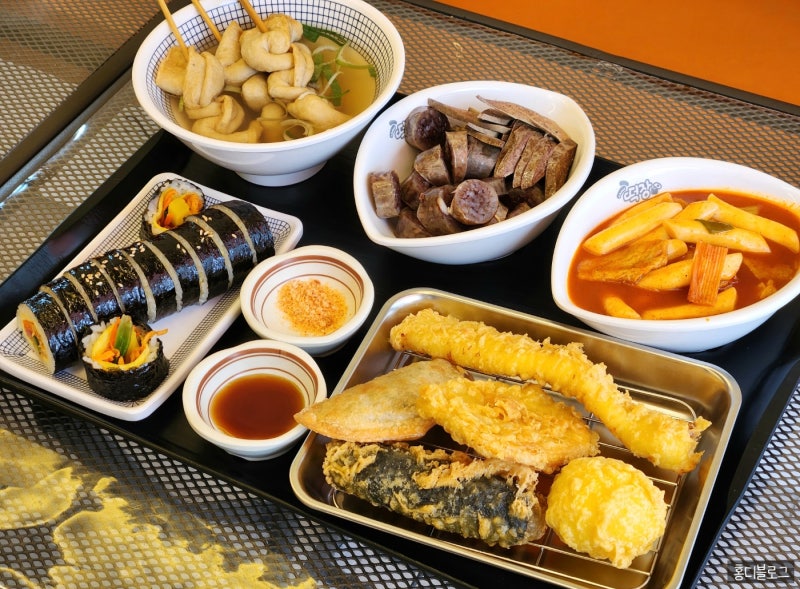
That pairing is one of the easiest things to understand about Korean snack culture. Tteokbokki is rarely just one isolated item. It often appears in a bunsik setting, where rice cakes, fish cakes, fried snacks, gimbap, and other simple foods naturally belong together.
How to order without making it complicated
For a first try, the easiest move is to start with the most basic red tteokbokki. That gives you the clearest version of the dish before you branch out into cheese, creamier fusion versions, or hot-pot styles. VISITKOREA’s core food description frames classic red tteokbokki as the standard reference point, while related restaurant and food pages show how often extra ingredients like egg, ramyeon, mandu, or cheese get added afterward.
If you are worried about spice, there is some good news. VISITKOREA explicitly notes that a non-spicy version also exists, made from stir-fried rice cakes seasoned with soy sauce. That means “I want to try tteokbokki, but not the hottest version” is a completely reasonable starting point.
What jeukseok tteokbokki is, and why it feels different
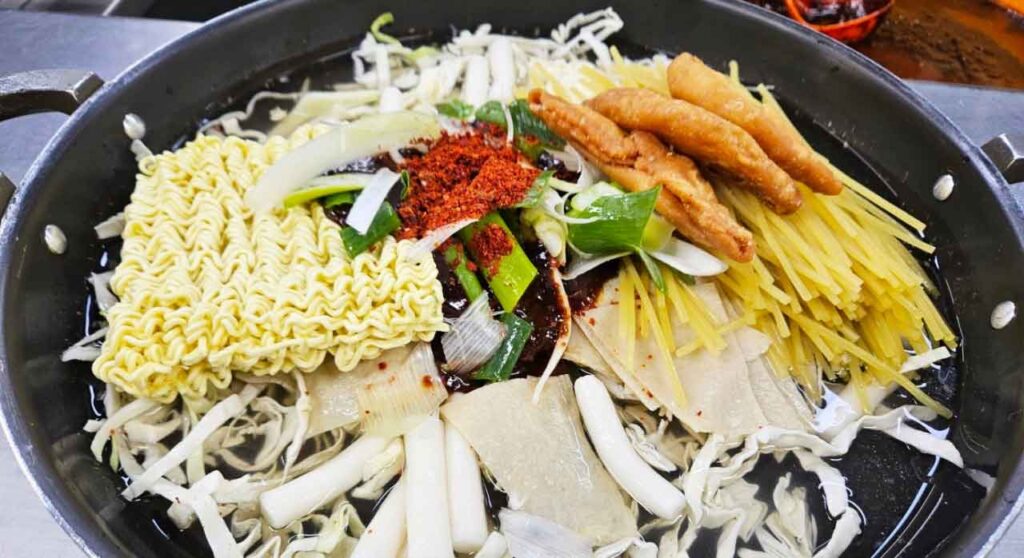
Sooner or later, you will probably see jeukseok tteokbokki, which is cooked at the table in a pot rather than served as a ready-made tray snack. VISITKOREA describes it as tteokbokki cooked on the spot with rice cakes, fish cakes, cabbage, eggs, grilled mandu, and chili-paste seasoning, sometimes with ramyeon or chewy noodles added. It also notes that the leftover broth is often mixed with rice and seaweed powder at the end.
That version feels less like a quick street snack and more like a full shared meal. For a first-time visitor, regular tteokbokki is usually easier to understand immediately, while jeukseok tteokbokki is great once you want the more social, sit-down version of the same flavor world.
The easiest way to enjoy it on a first visit
The biggest mistake is expecting one perfect “correct” version. Tteokbokki is a broad category now, not just one exact plate. Official food pages show standard red tteokbokki, soy-sauce versions, cheese-heavy versions, and hot-pot styles, which means your first goal does not need to be finding the most famous variation. It is enough to try one straightforward version and pay attention to what you like most: the chewiness, the heat, the sauce, or the side ingredients.
If you already liked our posts on Gwangjang Market street food or Korean convenience store food, tteokbokki is a natural next step. It is one of the clearest foods for understanding how Korean street snacks feel both casual and deeply familiar at the same time.
Why people keep coming back to it
Tteokbokki stays popular because it is easy to crave once you get used to it. Official guides repeatedly frame it as one of the most recognizable and most common Korean street foods, and that constant visibility is part of why it becomes such a comfort food for so many people.
If you want one food that explains why Korean street food can feel bold, comforting, and a little addictive all at once, tteokbokki is one of the best places to start.