
![[aespa] Whiplash: Minimal Power, Cool Control, and Why the Song Feels So Addictive](https://koreadayone.com/wp-content/uploads/2026/03/1-19.jpg)
Some K-pop songs win people over by being huge right away. They explode on first listen, throw everything at you, and make their point in under thirty seconds. “Whiplash” moves in a different way. It is more controlled than explosive, more precise than overwhelming, and that is exactly what makes it stick. The song feels like it knows how much power it has, so it never wastes energy proving it.
That kind of confidence matters. In pop music, especially in performance-heavy K-pop, there is always a temptation to go bigger, louder, or faster. “Whiplash” resists that instinct. It gives you a tight structure, a cool beat, a hook that lands without sounding desperate for attention, and a mood that keeps pulling you back in. The effect is less about instant chaos and more about replay value. You hear it once, and then you want to hear how it moves again.
One of the most interesting things about the song is how well it fits aespa’s identity without feeling like a copy of their older hits. If you already know the group through a more explosive track like “Supernova,” “Whiplash” feels like a colder, leaner relative. It still has that futuristic edge, but the energy is more restrained. It is not trying to overwhelm you with size. It is trying to lock you into a mood.
That is a big reason the song works so well beyond Korea too. Even if someone does not catch every lyric, they can understand the attitude immediately. “Whiplash” communicates through tone, pacing, and movement just as much as through words. The song feels sleek. It feels self-assured. It feels like walking into a room already knowing you are the center of it.
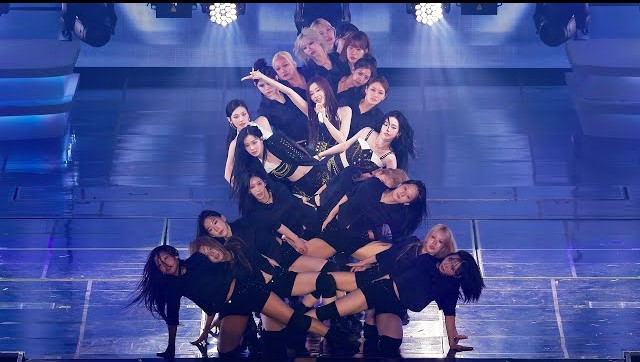
Another thing that makes “Whiplash” memorable is its clean tension. A lot of songs build drama by getting bigger and bigger, but this one often feels stronger because it leaves space. That space is important. It lets the beat breathe. It lets the members’ delivery hit harder. It lets the choreography look more intentional. Nothing feels accidental. Even the pauses feel designed.
That design is where aespa really shines here. The members do not perform the song like they are chasing the beat. They look like they are controlling it. That changes the whole mood. Instead of feeling rushed, the track feels composed. Instead of trying to convince you that it is powerful, it just behaves like power is already there.
This is also where “Whiplash” separates itself from a lot of confidence songs in K-pop. Some tracks present confidence as noise or rebellion. Others push it through maximal styling and aggressive punchlines. “Whiplash” goes cooler than that. It is not messy confidence. It is polished confidence. It is the kind that comes from control, not from chaos.
That coolness makes the song visually strong too. Whether you are watching a stage, a concept image, or a music video clip, the aesthetic matches the sound. The lines are clean. The mood is sharp. The attitude is never overplayed. Everything feels edited in the best way, like the song cut away anything unnecessary and kept only what could leave a mark.

There is also something very international about how the song lands. Not because it sounds generic, and not because it waters down its identity, but because it understands how modern pop attention works. You need a strong mood. You need a memorable visual language. You need a hook that survives short clips, repeat listens, and live performance. “Whiplash” checks those boxes without flattening itself into trend-chasing content.
That balance is difficult. Plenty of songs become popular online for a week and then lose their shape. “Whiplash” has more structure than that. It feels built to last beyond a single viral moment because the core idea is solid. The song knows what it is: sleek, tense, stylish, and just a little dangerous. It never drifts away from that.
For listeners who enjoy K-pop as a performance art form, this track is especially satisfying. It gives you enough musical texture to keep listening, but it also opens up once you watch it. The body language matters. The spacing matters. The members’ expressions matter. The song is not only heard; it is staged. That makes it a good entry point for people who want to understand why K-pop can feel so complete when sound, styling, and movement all line up.
If you have already read our post on “[aespa] Supernova,” this is a great follow-up because it shows a different side of the same group. Where “Supernova” feels bigger and more explosive, “Whiplash” feels narrower in the smartest possible way. And if you liked the elegant confidence of “[IVE] Love Dive,” this song offers another version of charisma—less dreamy, more razor-edged.

What stays with people after the song ends is not just the chorus. It is the feeling of precision. The feeling that every part of the track was tightened until only the strongest lines remained. That is why “Whiplash” can feel addictive without sounding cluttered. It does not give you everything at once. It gives you exactly enough, then lets the attitude do the rest.
In the end, “Whiplash” stands out because it understands a simple truth: sometimes the most memorable songs are not the ones that make the biggest mess. They are the ones that move with control, hold their shape, and leave a very specific mood behind. aespa does that beautifully here. The song feels modern, stylish, and sharply self-aware, which is exactly why it is so easy to return to.