
If you are visiting Korea for the first time, one of the smartest things you can do early is get a transportation card. VISITKOREA recommends cards such as Tmoney, EZL, WOWPASS, and Climate Card, and explains that these are rechargeable prepaid cards that do not require an account. They can make everyday travel much easier and often come with transfer benefits on public transportation.
Why T-money makes life easier right away
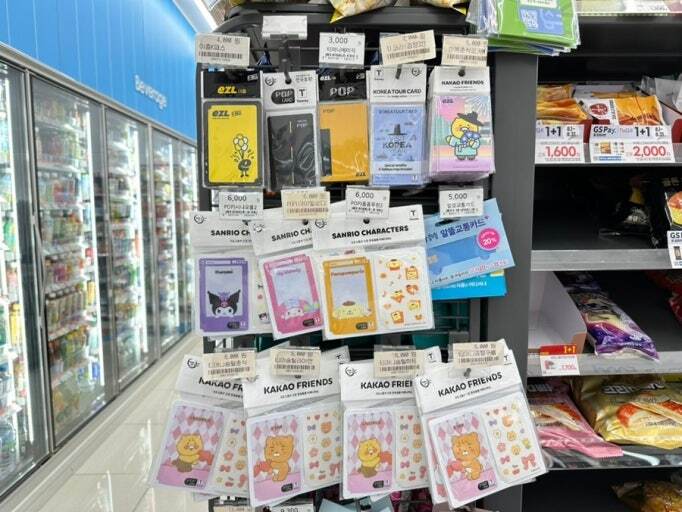
Tmoney is the most familiar option for many travelers, and VISITKOREA says it has the largest number of affiliated stores in Korea. Standard Tmoney and EZL cards can be purchased and charged at convenience stores nationwide, and Tmoney can also be reloaded at subway ticket machines and information centers in Seoul stations on Lines 1 to 8. In practice, that means you do not have to overthink your first card choice if you just want something easy and widely accepted.
If you already read our guide to getting from Incheon Airport to Seoul, this is the next step that makes the first few days feel much smoother. Once you have a transportation card in your pocket, moving between the airport, your hotel, and your first neighborhoods becomes much less annoying. That takeaway is an inference from how broadly these cards are accepted and how often official guides recommend them for public transportation.
How to use it on the subway
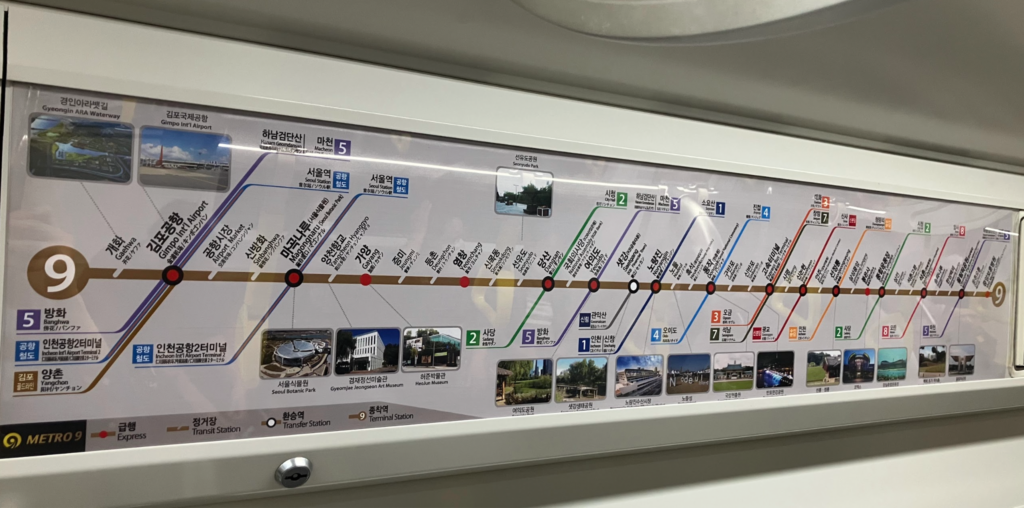
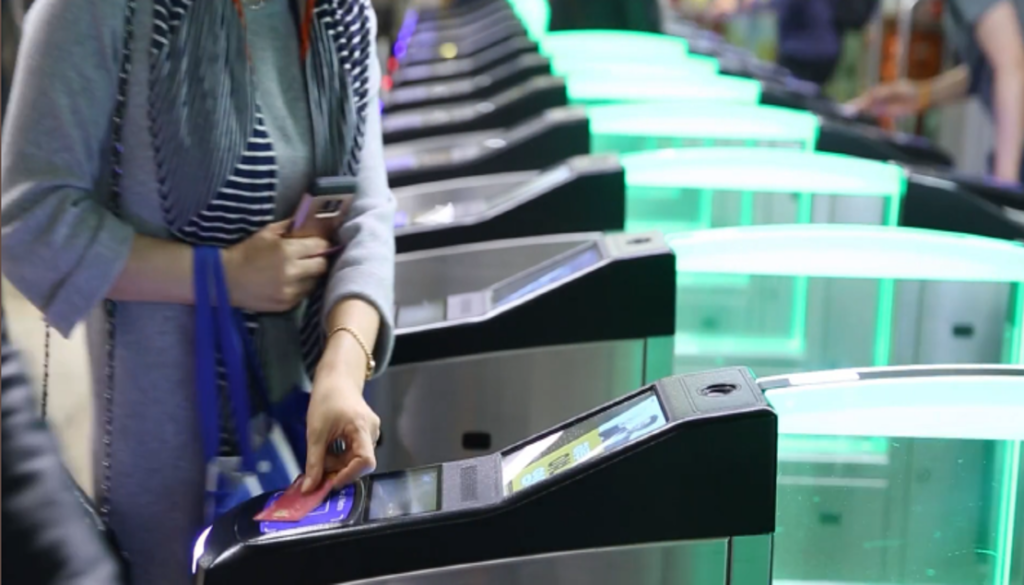
VISITKOREA describes the subway as one of the most useful ways for travelers to get around because it avoids traffic and uses color-coded lines that are easier to follow. If you have a transportation card, you can simply tap in at the turnstile. The same guide also notes that a single-use subway ticket is available from vending machines, but the fare is usually more expensive than paying with a transportation card. Single-use subway cards also require a 500 won deposit, which you later claim back at a refund machine.
That is why a transportation card usually feels better even for short stays. You do not need to stop and buy a new ticket every time, and the whole process feels less stressful when you are moving through an unfamiliar station. Seoul’s subway system is also connected beyond the city itself into surrounding areas like Incheon and Gyeonggi-do, which is another reason the card becomes useful so quickly.
How to use it on the bus without making the classic mistake
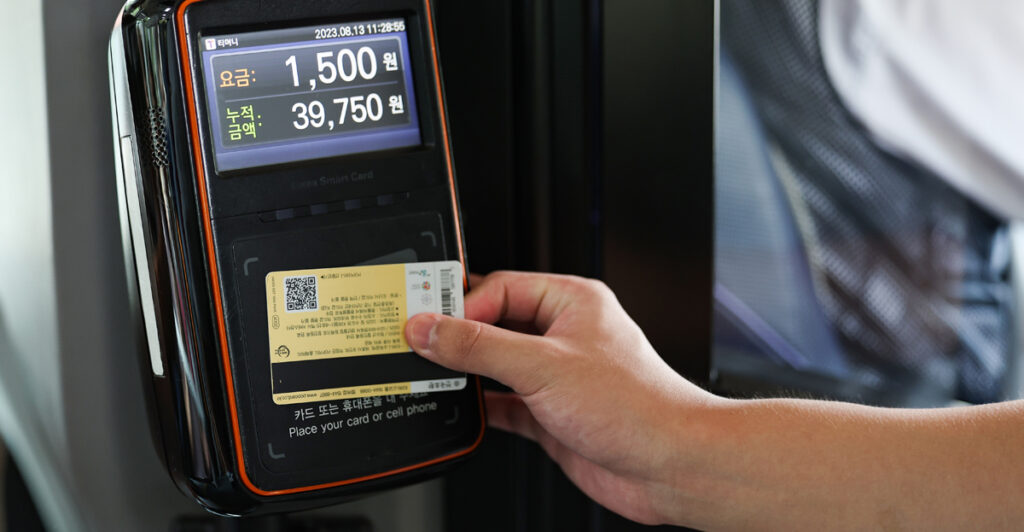
Buses are where many first-time visitors get confused, but the rule is simple. VISITKOREA says that on most city buses in Korea, you board through the front door and get off through the rear door. You tap when you get on, and in cities like Seoul you also need to tap again when you get off if you want the transfer discount to apply properly.
This matters more than people expect because bus systems in Korea are becoming increasingly cashless. VISITKOREA says all city buses in Incheon, Daegu, and Gwangju are cashless, and many buses in Seoul have followed the same direction. If you are paying cash out of habit, that can become a headache faster than you think.
The transfer rule that saves money
One of the best reasons to use Tmoney is the transfer benefit. VISITKOREA explains that in Seoul, free transfers apply when you tap off and then transfer to another bus or the subway within 30 minutes between 07:00 and 21:00, or within 1 hour between 21:00 and 07:00. The same source notes that Seoul allows up to four free transfers, while Busan’s transfer policy is different, which is a good reminder that exact rules can vary by city.
That means the safest advice is simple: always tap carefully, especially when leaving the bus. A lot of visitors think the important tap is only the first one, but in Korea the second tap can matter just as much.
Small things first-time visitors should know
VISITKOREA also notes that under-18 users need to register their date of birth at the time of purchase if they want youth fare benefits. For most adult travelers, the more useful point is that Tmoney and EZL are easy to buy and reload nationwide, while some other cards are more specialized. Climate Card, for example, is pitched mainly at travelers planning to use Seoul transportation heavily for a fixed period, while WOWPASS combines transportation with payments and currency exchange.
So if you just want the least confusing answer, a basic Tmoney card is still the easiest starting point for many visitors. After a long day out, it is also the kind of small thing that makes other Korea experiences easier, whether you are heading back from the subway to your hotel or stopping by a convenience store after reading our guide to Korean convenience store food. That last sentence is my practical recommendation, but it follows naturally from how widely the card is used in daily travel.
Why this feels like everyday Korea
Part of what makes public transportation in Korea memorable is how normal and efficient it feels once you understand the basics. You tap in, transfer, move quickly, and stop thinking about the system after a while. That may not sound exciting at first, but for a lot of travelers, that is exactly when Korea starts to feel less like a checklist and more like a place you can actually move through with confidence. The efficiency point here is an inference, but it is supported by the official emphasis on easy transfers, broad card acceptance, and subway usability for travelers.