

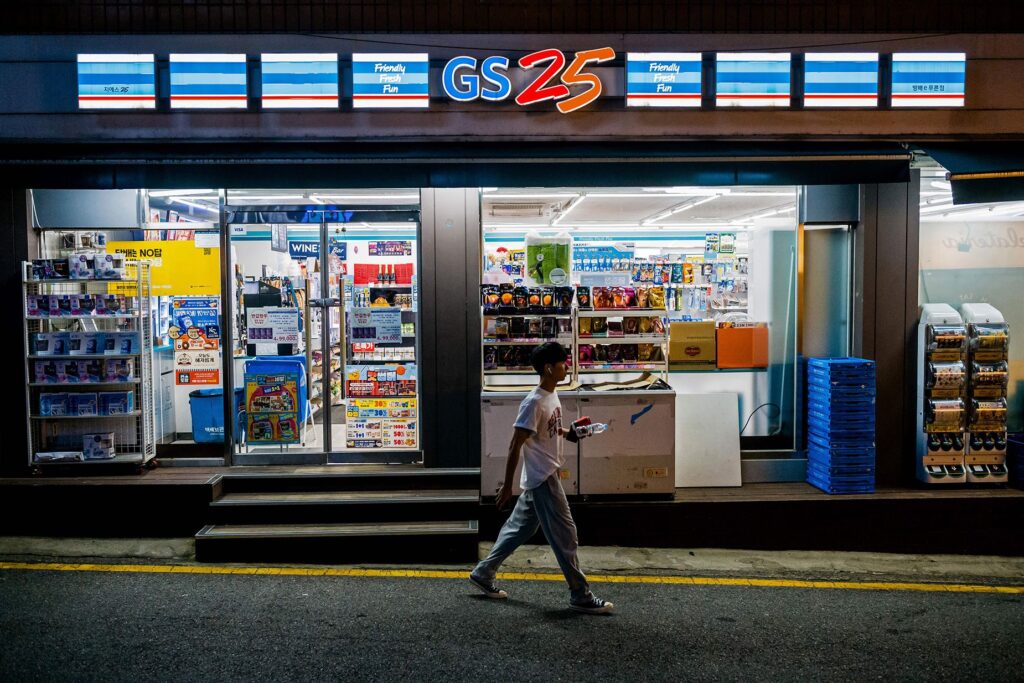
At night in Korea, some places start to feel more visible than they do during the day.
A convenience store is one of them.
You notice the bright lights first. Then the glass doors, the drink refrigerators, the shelves packed tighter than you expected, and sometimes the small tables outside or near the window. People come in for different reasons. One person buys water and leaves in thirty seconds. Another stands in front of the ramen section like they are actually deciding dinner. Someone else heats up a simple meal, sits down, and stays a while.
That is why convenience stores in Korea feel culturally interesting. They are not just about speed. They are also about rhythm, habit, and the small spaces people rely on between bigger parts of the day.
A place for the in-between moments
One reason Korean convenience stores stand out is that they fit so easily into ordinary routines.
They are there when someone missed a meal. They are there after work, after class, after a long ride home, or before the subway gets too crowded again. They are there when you need something useful, but also when you just need a brief stop that does not ask too much from you.
That is an important part of the atmosphere. A convenience store in Korea often feels casual in the best way. You do not need a plan. You do not need a big budget. You do not even need much time. You can step in, solve a small problem, and keep moving.
And sometimes that small problem is not really a problem at all. Sometimes it is just hunger, tiredness, boredom, or the need for a ten-minute pause.
If you already read my post about Korean convenience store food, this is where the bigger cultural picture starts to show. The food matters, but the reason it matters is that the store itself has become part of daily urban life.
More than snacks, less formal than a meal out
What makes Korean convenience store culture feel distinct is that it sits in a very useful middle zone.
It is not quite a restaurant experience, and it is not just a place for chips and soda either. You can find instant noodles, triangle kimbap, lunch boxes, drinks, desserts, and small everyday necessities all in one place. That mix creates a kind of flexible usefulness that travelers notice quickly.
The store can become breakfast, a late-night meal, a quick stop before a train ride, or a place to pick up one thing and accidentally leave with four. It works because it adapts to whatever scale of need you have at the moment.
That middle-zone feeling also says something about Korean city life. A lot of daily life in Korea moves fast, but not always in a glamorous way. Sometimes people just need something efficient, warm, and nearby. Convenience stores answer that need extremely well.
If café culture in Korea often gives you a slower, more aesthetic kind of pause, convenience stores offer a more practical version of the same idea. Less atmosphere, maybe, but more immediacy.
Why the instant ramen corner is such a memorable part
For a lot of foreign visitors, the most memorable convenience-store moment is not buying a snack.
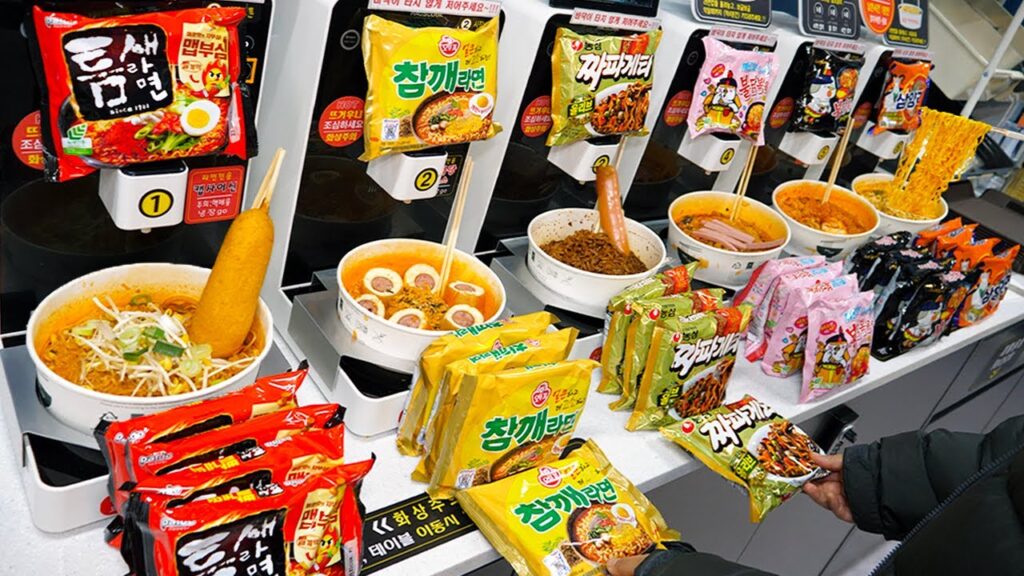
It is making instant ramen inside the store.
That experience feels small, but it stays in people’s memory because it turns a familiar product into a tiny event. You choose the ramen, add hot water, maybe use the in-store machine, and suddenly a quick purchase becomes a real meal. It is informal, simple, and strangely satisfying.
Part of the appeal is that it feels very unpretentious. No reservation, no menu drama, no need to plan ahead. You are just hungry, and the store meets you where you are.
That is also why this part of convenience-store culture works so well on social media. It is easy to film, easy to understand, and easy for first-time travelers to try. But beyond the novelty, it also reflects something real about Korea: convenience here is often designed to be lived in, not just purchased.
Alone, but not awkward
Another reason convenience stores feel culturally revealing in Korea is that they make solo time look normal.
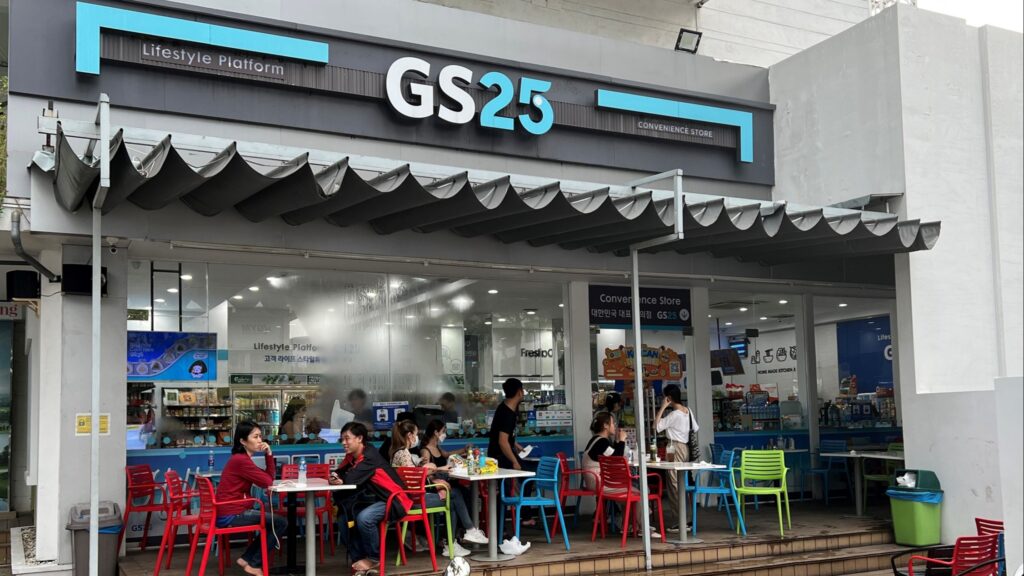
That may sound small, but it matters. A person eating alone at a convenience store table, checking their phone, finishing a drink, or taking a short break does not look unusual. The space allows a kind of low-pressure solitude that many people need in busy cities.
It is not cozy in the same way a home kitchen is cozy. It is not soft in the way a café can be. But it offers something else: permission to pause without ceremony.
That is a very modern kind of comfort.
It also connects naturally with other parts of Korean daily culture. The same society that made food delivery, public transportation, and other fast-moving systems feel seamless also made room for these tiny in-between spaces where people can eat, rest, and continue their day without much friction.
What this says about Korean city life
Korean convenience stores are useful because they sell things.
But they are memorable because they quietly reflect a way of living.
They reflect long days, late nights, compact neighborhoods, practical eating habits, and a culture that often values efficiency without making everything feel cold. That balance is important. A convenience store could feel purely transactional. In Korea, it often feels a little more human than that.
Not warm in a sentimental way. Warm in a functional way.
And that may be why travelers remember them so clearly. They are easy to enter, easy to understand, and surprisingly revealing once you notice how many roles they play in one ordinary day.
Small store, bigger meaning
That is probably the best way to understand Korean convenience store culture.
It is not just about buying something quickly.
It is about how a small, bright, ordinary store becomes part of the city’s breathing pattern. People stop in, eat, wait, rest, solve tiny problems, and move on. Nothing about it looks dramatic, but that is exactly why it feels real.
So yes, Korean convenience stores are good for snacks.
But they are also one of the easiest places to see how Korean daily life actually works when nobody is trying to perform it for visitors.